




Call now 0208 663 4000
Or "Contact Us" and we'll call you back !


Showing posts with label david cameron. Show all posts

Tuesday, 23 February 2016

In or Out. What do British Businesses Think?

Image Credit: The Guardian

David Cameron is back from his "battle in Brussels" and his reward for his efforts were some considerable reforms on the UK's EU membership agreement including:
  • Child benefit - Child benefit payments to migrant workers to be recalculated.
  • Migrant welfare payments - The UK can decide to limit in-work benefits for EU migrants during their first four years in the UK.
  • Eurozone - Britain can keep the pound while being in Europe, and its business trade with the bloc, without fear of discrimination. Any British money spent on bailing out eurozone nations will be reimbursed.
  • Protection for the City of London - Safeguards for Britain's large financial services industry to prevent eurozone regulations being imposed on it.
  • Sovereignty - The UK will not be part of an "ever closer union" with other EU member states.
  • 'Red card' for national parliaments - It will be easier for governments to band together to block unwanted legislation.
  • Competitiveness - The settlement calls on all EU institutions and member states to "make all efforts to fully implement and strengthen the internal market" and to cut red tape.
  • Some limits on free movement - Denying automatic free movement rights to nationals of a country outside the EU who marry an EU national. There are also new powers to exclude people believed to be a security risk.
But what do UK businesses think about these reforms?

According to the Financial Time bosses more than a third of the companies in the FTSE 100 have declared that Britain is better in the EU and that Brexit would lead to potential job losses and affect investment. Companies including Vodafone, easyJet, BT and Barclays believe an exit from the EU would be negative for the British economy.

Moody's, a key investors service, said: “A decision to leave the EU would be credit negative for the U.K. The economic costs of a decision to leave the EU would outweigh the economic benefits.”

On Monday London Mayor Boris Johnson, a high profile figure, said he'll campaign to quit the EU. Since then the pound dropped to its lowest level in almost 7 years against the dollar, the biggest decline since 2009. 

Are you a business owner? Do you think the UK is better in or out of the EU? Let us know your thoughts. 

360ict provides managed IT services and support for SMEs in central London and the south-east, including Croydon and Bromley. For more advice on gaining competitive advantage as a mid-sized company, give us a call on 0208 663 4000. 

Friday, 12 February 2016

UK Digital Businesses Play Essential Role in Economy Growth

Image credit: Shropshire Business Today
A study conducted by Tech City UK has revealed that digital technology businesses are playing an essential role in the UK economy's growth. The innovation that this sector is generating is profound with businesses transforming the employment landscape, driving productivity and reimagining traditional industries.

The key findings to note from the report are:
  1. Digital technology industries are a key contributor to the UK's economy, growing faster in turnover, GVA and productivity than the rest of the economy.
  2. Digital technologies are influencing businesses beyond the technology industry.
  3. The digital technology economy are creating well paid employment opportunities, three times faster that the rest of the economy, across the UK.
  4. Digital technology businesses are supporting growth across UK cities.
In partnership with Nesta, Tech City UK analysed nationwide data to understand the impact of the digital economy on wider business trends. The report found that the areas with the highest cluster of digital technology companies were benefitting from better employment rates, turnover and average salaries. The report also noted that there has been a surge in digital technology communities with almost 180,000 individuals across the country taking part in Meetups. Networks and face-to-face contact have helped these tech hub areas grow nationally and now the sector has over 1300 active groups in the UK.

Prime minister David Cameron commented: “Britain’s world leading tech sector gives us a competitive edge that is not just transforming our daily lives but also our economy. Tech is transforming the way we do all kinds of business.”
Eileen Burbidge, Tech City UK chair  added: “The UK’s credentials as a home for digital excellence have been well established, and now Tech Nation 2016 provides a new level of insight into the impressive productivity of our digital economy – driving growth across all sectors and regions of the country.”
360ict provides managed IT services and support for SMEs in central London and the south-east, including Croydon and Bromley. For more advice on gaining competitive advantage as a mid-sized company, give us a call on 0208 663 4000. 

Friday, 20 November 2015

Why India Invests in the UK

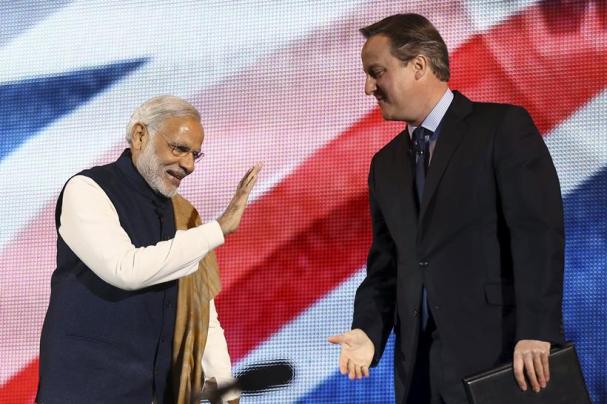
Image Credit: Indian Express
A few weeks ago China’s President made a visit to the UK to discuss the improvement of trade between the two countries, and now India’s Prime Minister, Mr Modi, has met with David Cameron to discuss bilateral deals worth around £10 billion. Is Mr Cameron making a point that the UK would be better off outside of the EU, where these kinds of deals would be much easier to accomplish without all the EU red tape? 

Mr Cameron believes that these are countries with whom Britain should do far more business, but with previous plans, like doubling trade with India between 2010 and 2015, failing, what makes this trip any different?

India is emerging as the strongest economy out of the Bric nations, Brazil, Russia, India and China,  and is growing at 7% per year. 

Earlier this year the UK Trade and Investment (UKTI) released a report confirming that India is now the third-largest source of foreign direct investment into the UK, which increased to 64% in 2014. The UK India Business Council estimated that the total value of Indian investment in the UK totalled at £1.89 billion by the end of 2014s financial year, and 110,000 people are now employed by Indian companies. 

Talking to the BBC, Alpesh Patel of Praefinium Partners, said “that the ease of doing business in the UK, as well as the English language and familiarity with UK institutions, also makes the UK an attractive proposition for Indian investors.” But this works both ways, by 2015 the UK had invested £14.5 billion in India according to CBI, making the UK the largest foreign investor.  


With Mr Modi’s trip dubbed a success, more investment in the UK can only be a good thing. But should UK based companies now look outside of the EU, to countries like India, if they want to grow their business internationally?

Friday, 21 August 2015

Will The Apprenticeship Levy Benefit SMEs?

Image source: www.tracweb.co.uk
The UK government is still 100% committed to the planned apprenticeship levy, despite concerns from business leaders, David Cameron said this week.

The Prime Minister has said the levy will help create 3 million apprenticeships across the country and will make larger employers contribute funding to apprenticeship training. 

A new series of industry standards will be introduced for apprenticeships in a varied range of professions from IT, engineering and transport to fashion. 

However, the Confederation of British Industry (CBI) has voiced concerns that it would not deliver the skilled youth businesses would want, and it would do very little to help SMEs

CBI said: "With an apprenticeship levy for larger employers set to be introduced following the Budget, the CBI is concerned that while it may fund more apprenticeships to meet the Government's target of three million, it will not deliver the high-quality, business-relevant training needed, and do little to help small or medium-sized businesses.”

David Cameron responded: "The greatest asset any employer has is their workforce. And by investing in them, they are investing in the success and future of their business. As a One Nation Government, we are committed to supporting three million quality apprenticeships over the next five years - to help strengthen our economy, deliver the skills that employers need and give millions more hard-working people financial security and a brighter future.”

The government has set an extremely high target to reach. Should they focus on creating quality apprenticeships over volume? Would the scheme be more likely to benefit small businesses if this were the case? 


360ict provides managed IT services and emergency IT support for SMEs in central London and the south-east, including Bromley and Croydon. For more advice on gaining competitive advantage as a mid-sized company, give us a call on 0208 663 4000 or head to our website.

Friday, 24 July 2015

Encrypted Communication Apps Could Be Banned in the UK

Over the past few weeks the press has been warning that WhatsApp and all other encrypted communication applications could be banned in the UK. But why would the government ban these extremely popular communication applications? 

In 2012, Home Secretary Theresa May proposed a new communications data bill called Data Retention and Investigatory Powers Bill, which would compel technology companies to track, record and store mobile phone and web usage from their users. It has become known as the “Snooper’s Charter” but aspects of the bill have been deemed “inconsistent with EU law” - most notably Article Eight of European Convention of Human Rights, which concerns an individual’s right to privacy.

WhatsApp, iMessage, SnapChat and other popular messaging services use end-to-end encryption to keep texts and multimedia safe from prying eyes. David Cameron had hoped to outlaw this level of privacy to help law enforcement services track and monitor potential terrorist threats.

Many technology companies have spoken out against the measures and refuse to remove the end-to-end encryption from their services. Apple CEO, Tim Cook, said that Apple has “never worked with any government agency from any country to create a backdoor in any of our products or services ... and we never will."

Out of the 55,772 readers of the bill, 49,079 voted against the changes proposed that meant providers, phone companies and technology firms store a record of all online activity. This would include everything from Google searches to Facebook conversations and SnapChat videos, which could be accessed at anytime by law enforcement agencies. 

Here at 360ict we understand the need to protect the country from potential threats, but do you think this bill takes it a step too far? Let us know your thoughts.

360ict provides managed IT services and emergency IT support for SMEs in central London and the south-east, including Bromley and Croydon. For more advice on gaining competitive advantage as a mid-sized company, give us a call on 0208 663 4000 or head to our website.