




Call now 0208 663 4000
Or "Contact Us" and we'll call you back !


Showing posts with label EU. Show all posts

Tuesday, 23 February 2016

In or Out. What do British Businesses Think?

Image Credit: The Guardian

David Cameron is back from his "battle in Brussels" and his reward for his efforts were some considerable reforms on the UK's EU membership agreement including:
  • Child benefit - Child benefit payments to migrant workers to be recalculated.
  • Migrant welfare payments - The UK can decide to limit in-work benefits for EU migrants during their first four years in the UK.
  • Eurozone - Britain can keep the pound while being in Europe, and its business trade with the bloc, without fear of discrimination. Any British money spent on bailing out eurozone nations will be reimbursed.
  • Protection for the City of London - Safeguards for Britain's large financial services industry to prevent eurozone regulations being imposed on it.
  • Sovereignty - The UK will not be part of an "ever closer union" with other EU member states.
  • 'Red card' for national parliaments - It will be easier for governments to band together to block unwanted legislation.
  • Competitiveness - The settlement calls on all EU institutions and member states to "make all efforts to fully implement and strengthen the internal market" and to cut red tape.
  • Some limits on free movement - Denying automatic free movement rights to nationals of a country outside the EU who marry an EU national. There are also new powers to exclude people believed to be a security risk.
But what do UK businesses think about these reforms?

According to the Financial Time bosses more than a third of the companies in the FTSE 100 have declared that Britain is better in the EU and that Brexit would lead to potential job losses and affect investment. Companies including Vodafone, easyJet, BT and Barclays believe an exit from the EU would be negative for the British economy.

Moody's, a key investors service, said: “A decision to leave the EU would be credit negative for the U.K. The economic costs of a decision to leave the EU would outweigh the economic benefits.”

On Monday London Mayor Boris Johnson, a high profile figure, said he'll campaign to quit the EU. Since then the pound dropped to its lowest level in almost 7 years against the dollar, the biggest decline since 2009. 

Are you a business owner? Do you think the UK is better in or out of the EU? Let us know your thoughts. 

360ict provides managed IT services and support for SMEs in central London and the south-east, including Croydon and Bromley. For more advice on gaining competitive advantage as a mid-sized company, give us a call on 0208 663 4000. 

Wednesday, 3 February 2016

Safe Harbour - What It Means For Tech Companies

Image credit: LinkedIn
What is Safe Harbour?

In 2000 an agreement called Safe Harbour came into force in the EU that prohibited citizens' personal data from being sent to places that don't have proper privacy protections. It was decided that American firms could self-certify that data being sent to their data centres would be properly protected, so that transfers to the US wouldn't be slowed down. 

What went wrong with Safe Harbour?

Everyone has heard of the whistleblower Edward Snowden, well in 2013 he leaked documents outlining the US security services' cyber-spying operations, which caused outrage throughout the world. Privacy campaigners have now been questioning what data sites like Facebook have been sharing with the NSA. However, up until recently there was no way of knowing as they were protected under the Safe Harbour agreement. But that's all about to change….Last October a court ruled that national data watchdogs need to review all transfers of data on an individual basis, but an agreement needed to be made with the US first.

What does this mean for tech companies?

Since October Europe and the US have been in negotiations regarding a new data transfer act and were meant to reach an agreement by January 31, however just when they looked like they were no closer to making a compromise, they formed the "EU-US Privacy Shield". Tech companies must be relieved as EU regulators were on the verge of enforcing a data transfer clampdown if an agreement hasn't been made soon. 

The new EU-US Privacy Shield, which will still allows the easy transfer of EU citizens' data, come with promises of better privacy protections from the US. Essentially, Europe is making the US abide by the same data protection standards found in the EU. Tech companies will also face regular compliance checks to ensure that they are still following the deal's rules.

Andrus Ansip, European commissioner for the digital single market said: “We have agreed with our US partners a new framework that will ensure the right checks and balances for our citizens.”

Vera Jourova, European commissioner for justice, said: “For the first time ever, the US has given the EU binding assurances that the access of public authorities for national security purposes will be subject to clear limitations, safeguards and oversight mechanisms.”

Are you still reluctant to share personal data? Let us know your thoughts! 

360ict provides managed IT services and support for SMEs in central London and the south-east, including Croydon and Bromley. For more advice on gaining competitive advantage as a mid-sized company, give us a call on 0208 663 4000 or head to our website. 

Friday, 20 November 2015

Why India Invests in the UK

Image Credit: Indian Express
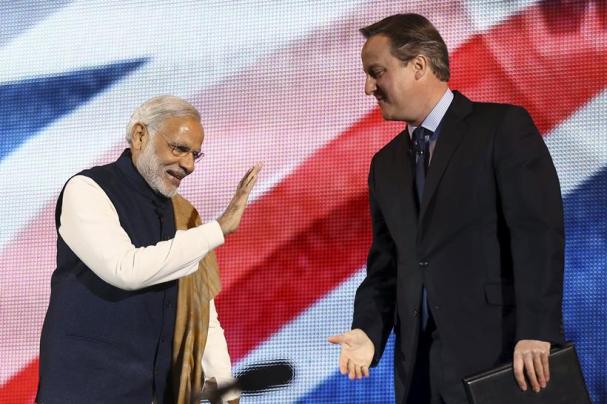
A few weeks ago China’s President made a visit to the UK to discuss the improvement of trade between the two countries, and now India’s Prime Minister, Mr Modi, has met with David Cameron to discuss bilateral deals worth around £10 billion. Is Mr Cameron making a point that the UK would be better off outside of the EU, where these kinds of deals would be much easier to accomplish without all the EU red tape? 

Mr Cameron believes that these are countries with whom Britain should do far more business, but with previous plans, like doubling trade with India between 2010 and 2015, failing, what makes this trip any different?

India is emerging as the strongest economy out of the Bric nations, Brazil, Russia, India and China,  and is growing at 7% per year. 

Earlier this year the UK Trade and Investment (UKTI) released a report confirming that India is now the third-largest source of foreign direct investment into the UK, which increased to 64% in 2014. The UK India Business Council estimated that the total value of Indian investment in the UK totalled at £1.89 billion by the end of 2014s financial year, and 110,000 people are now employed by Indian companies. 

Talking to the BBC, Alpesh Patel of Praefinium Partners, said “that the ease of doing business in the UK, as well as the English language and familiarity with UK institutions, also makes the UK an attractive proposition for Indian investors.” But this works both ways, by 2015 the UK had invested £14.5 billion in India according to CBI, making the UK the largest foreign investor.  


With Mr Modi’s trip dubbed a success, more investment in the UK can only be a good thing. But should UK based companies now look outside of the EU, to countries like India, if they want to grow their business internationally?